
EXPERIENCE DESIGN INTERNSHIP
IA Collaborative

Designing human-in-the-loop GenAI market research tools that illuminate the customer experience
ROLE
Experience Design Intern
DURATION
June 2025 - August 2025
SKILLS
User Interviews
Figma Wire-framing & Prototyping
Design Systems
Feature Planning & Prioritization
OUTCOME
Developed, deployed, and in-use by the Eli Lilly Market Research Team.

Protected Case Study
This work includes confidential client materials. If you’ve been provided a passcode, click below to view the whole thing. If not, I’m happy to share access… just get in touch!
In the meantime, here’s a high-level snapshot…

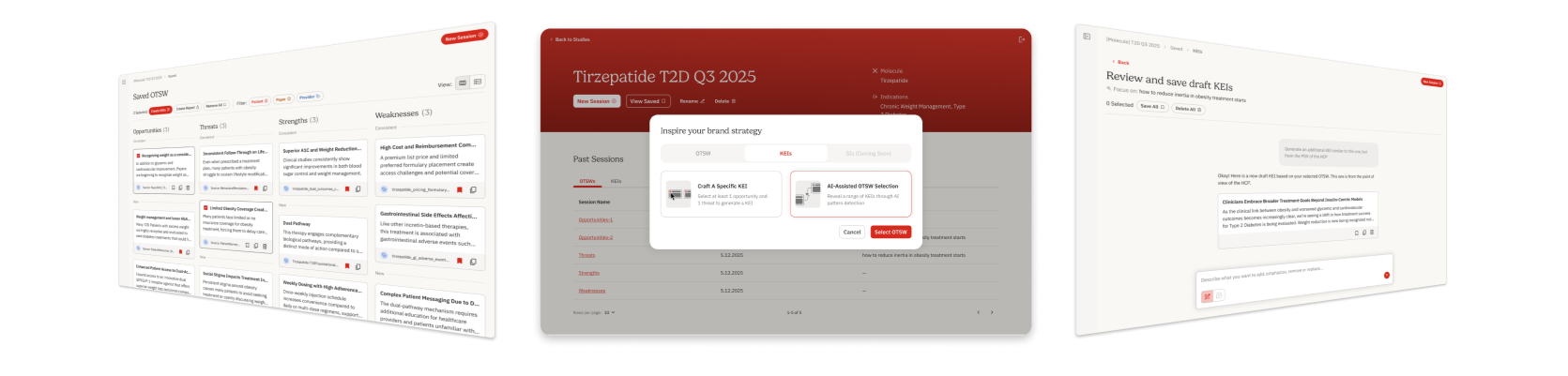
At IA Collaborative we designed a GenAI workbench for Eli Lilly’s Market Research team to better understand patients, spot market gaps, and craft audience-focused messaging.
GenAI Tools for Pharma
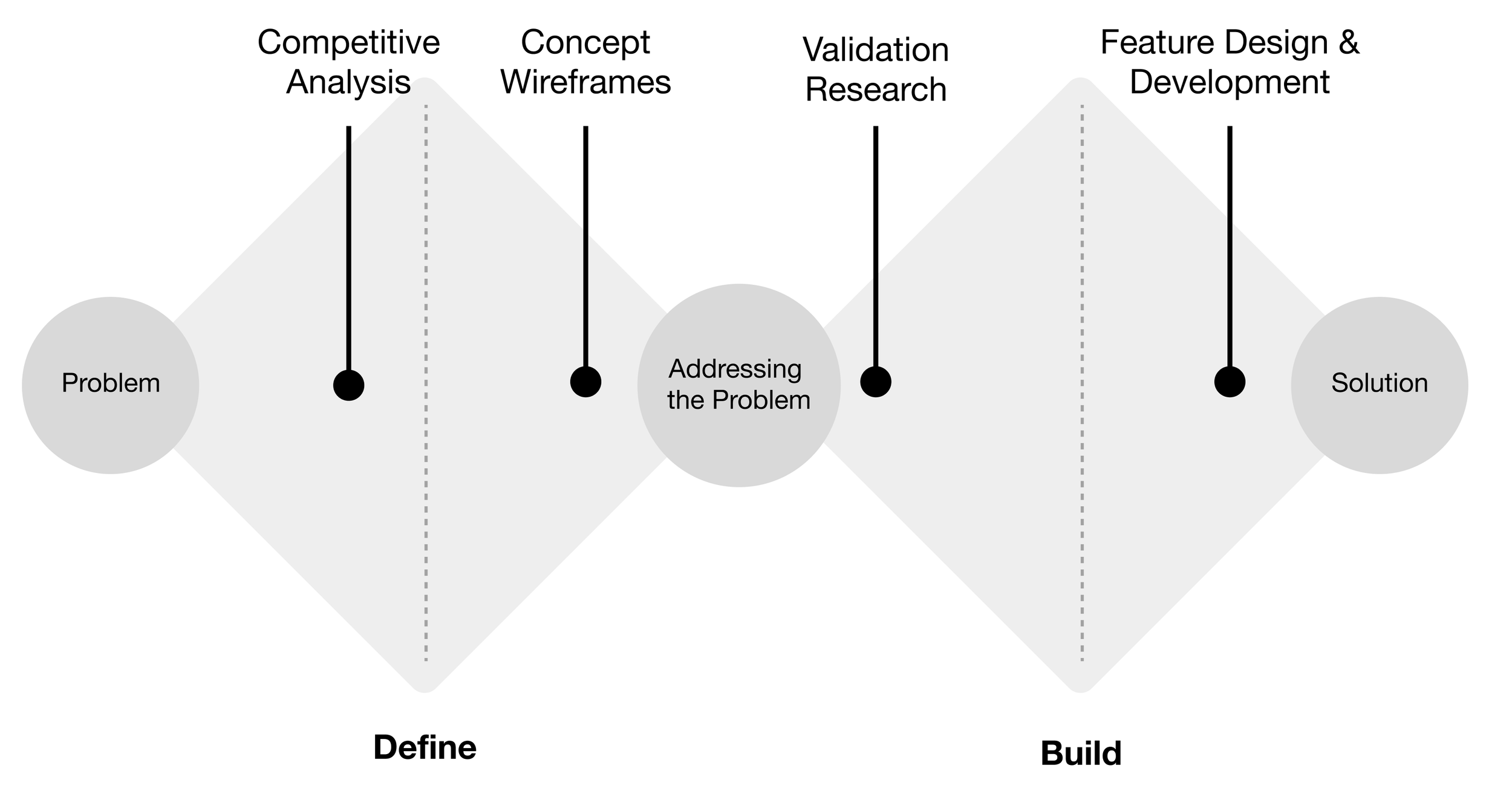
I contributed at various stages of the design process...
-
Created research stimuli and interview guides and documented findings from live interviews.
-
Explored branding directions and produced wireframes from low to high-fidelity, including feature planning and prioritization.
-
Facilitated validation research collaborated on feature implementation after Product Definition.

RESEARCH EXPERIENCE
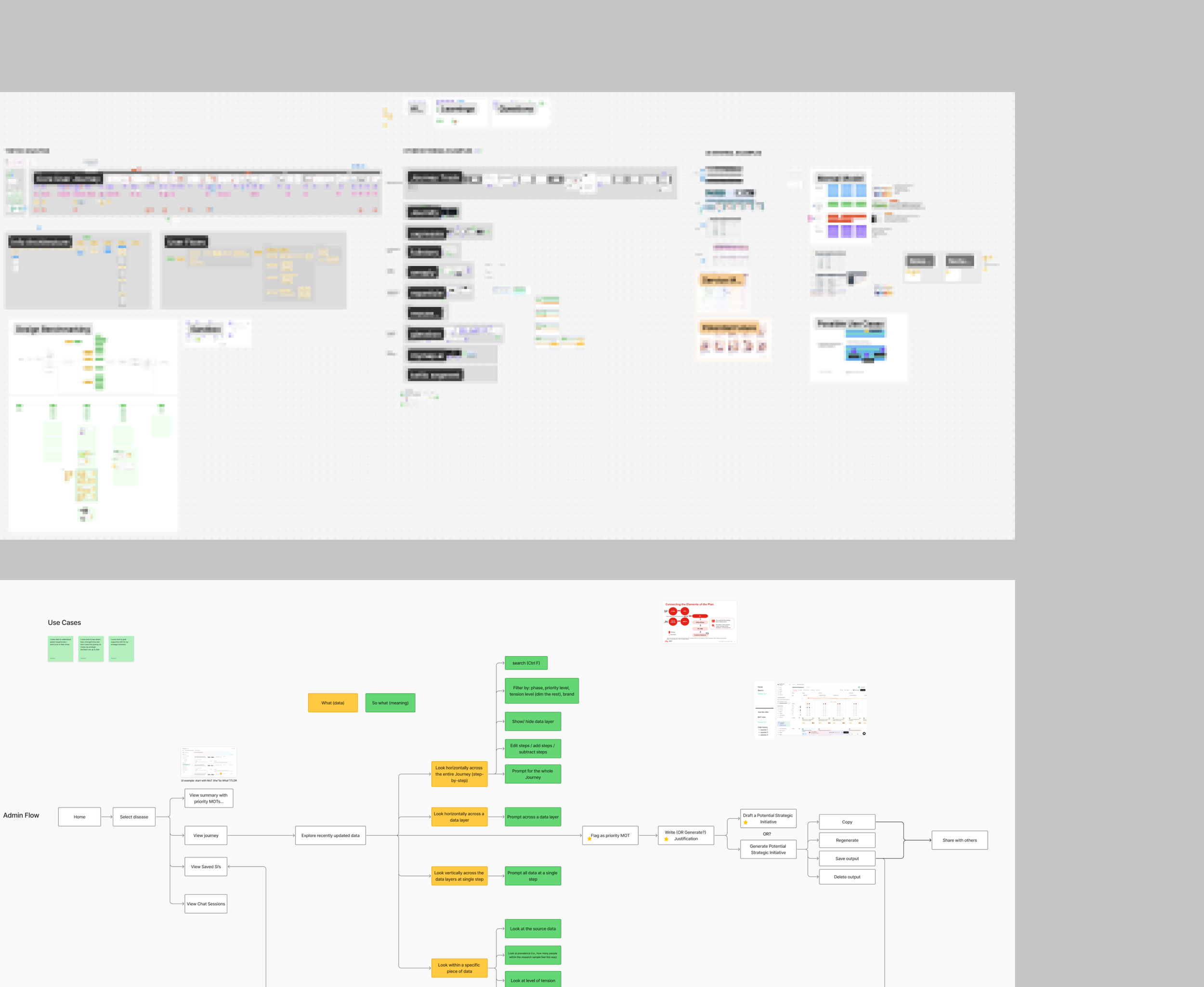
Competitive Analysis
Looking at analogous and similar tools to understand how IA can bring additional value and differentiate.
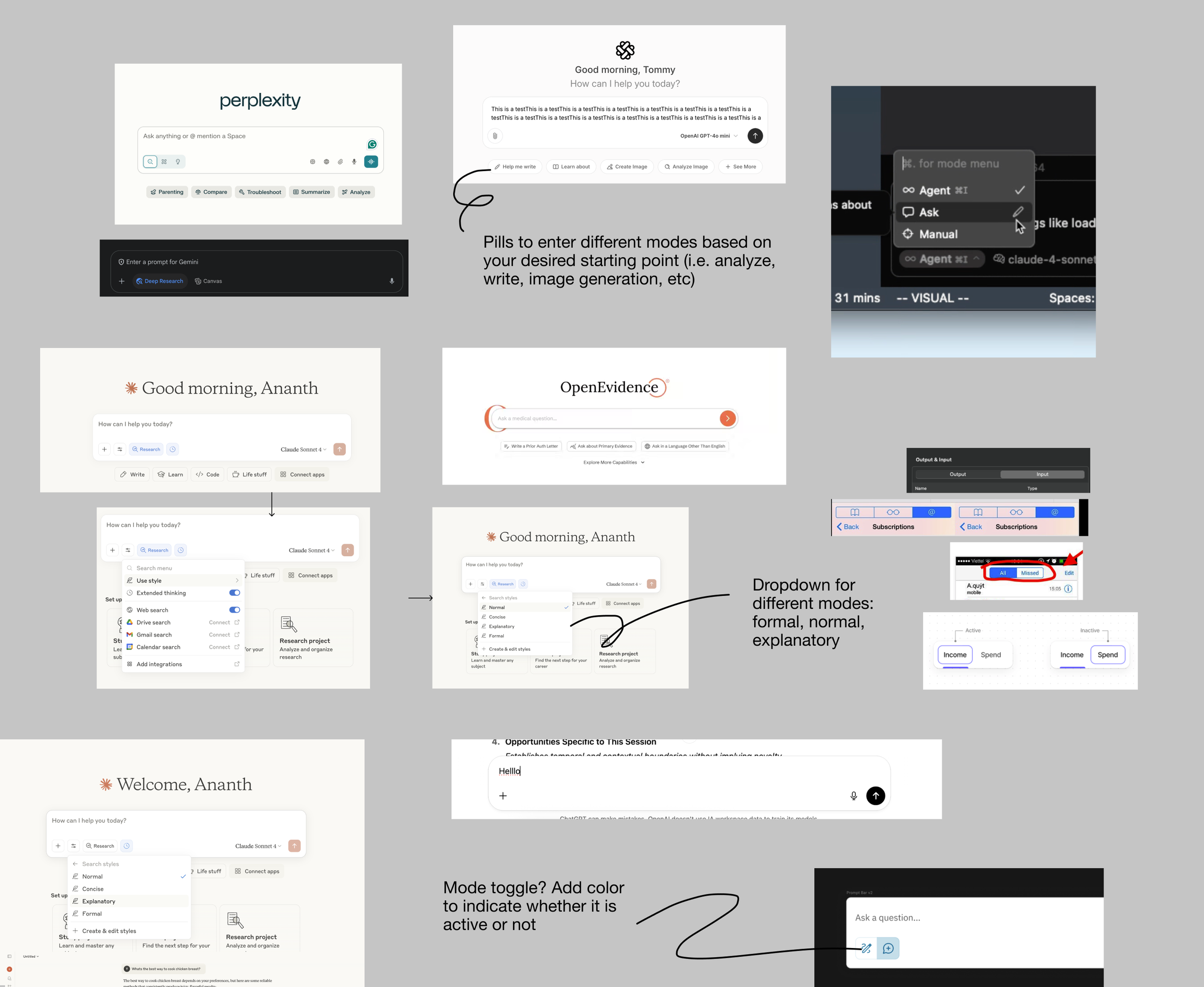
Design Benchmarking
Finding interesting interaction patterns to borrow and learn from in our designs.
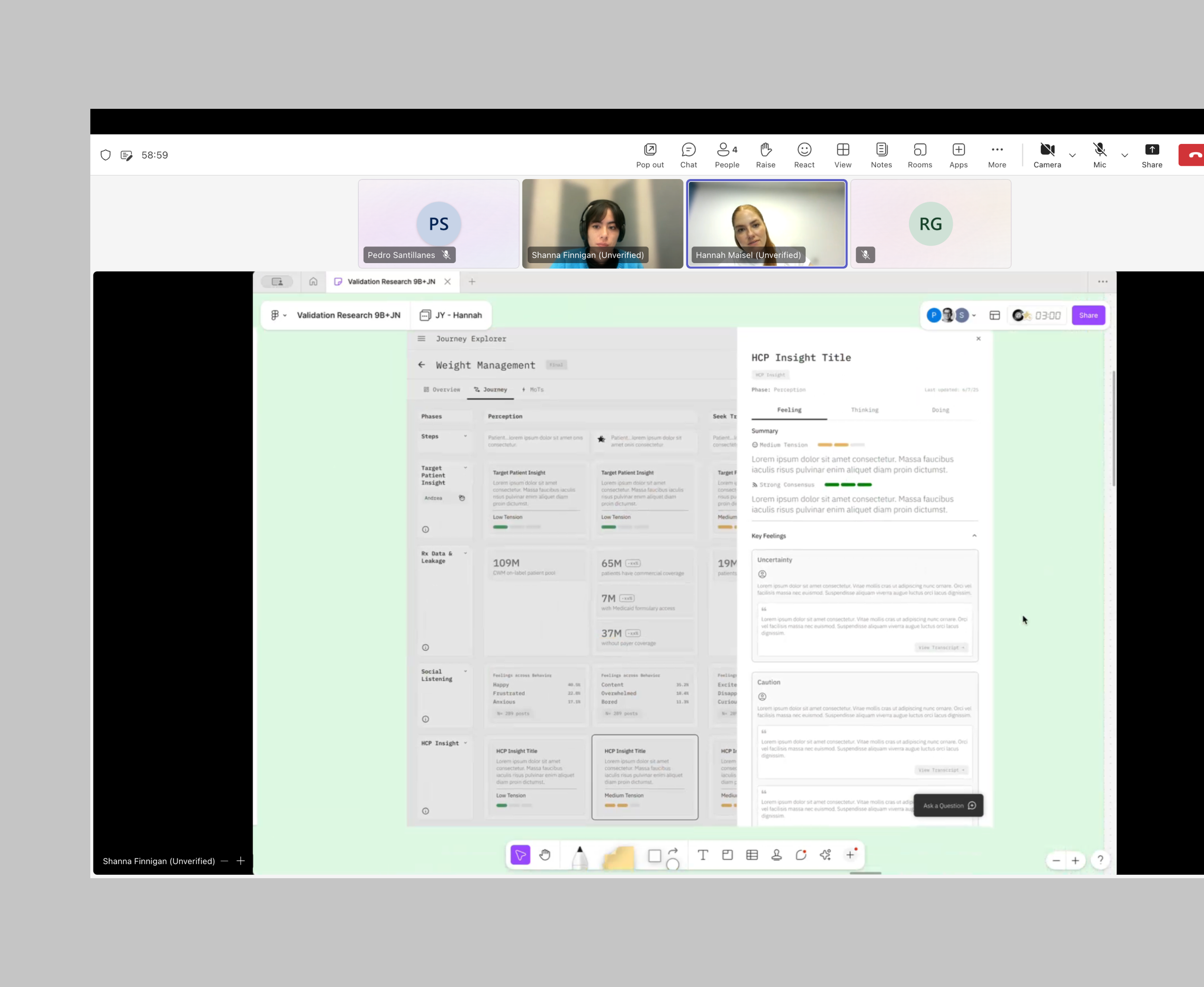
Conducted remote interviews to prioritize features, test low-fidelity wireframes, and gather client feedback across multiple stages of fidelity.
Stakeholder Interviews
COLOR EXPLORATIONs
Explored and researched color schemes to create distinct, meaningful palettes for the two new products in the Workbench.
Researched psychological associations of each color and tested background/ foreground contrast ratios to ensure WCAG compliance.

Design for Alignment Before Execution
This work reminded me that clarity comes before polish. Starting with rough sketches allowed me to move faster, surface assumptions, and validate ideas early—saving time and energy before committing to high-fidelity execution.
Sketches may do the trick!
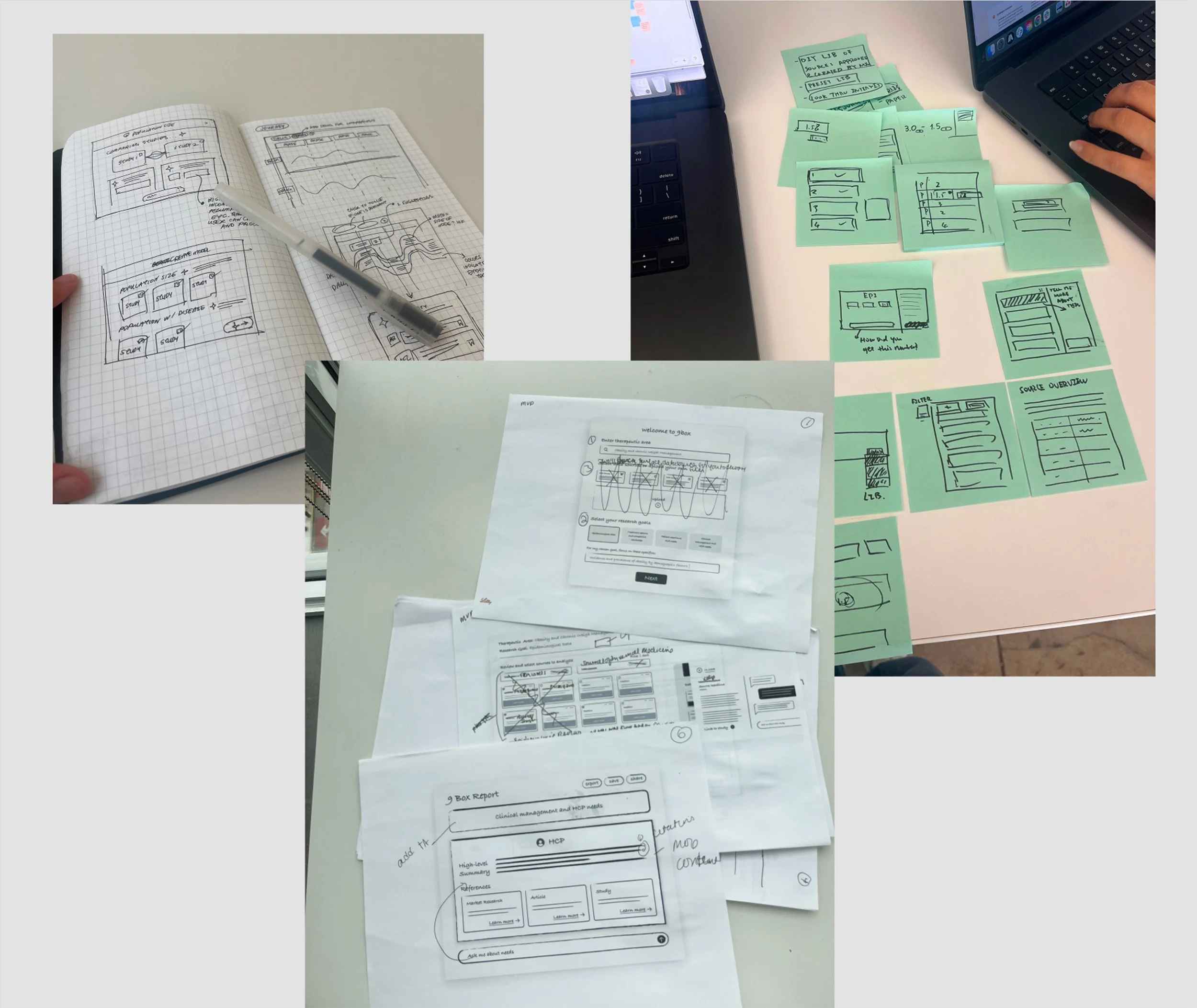
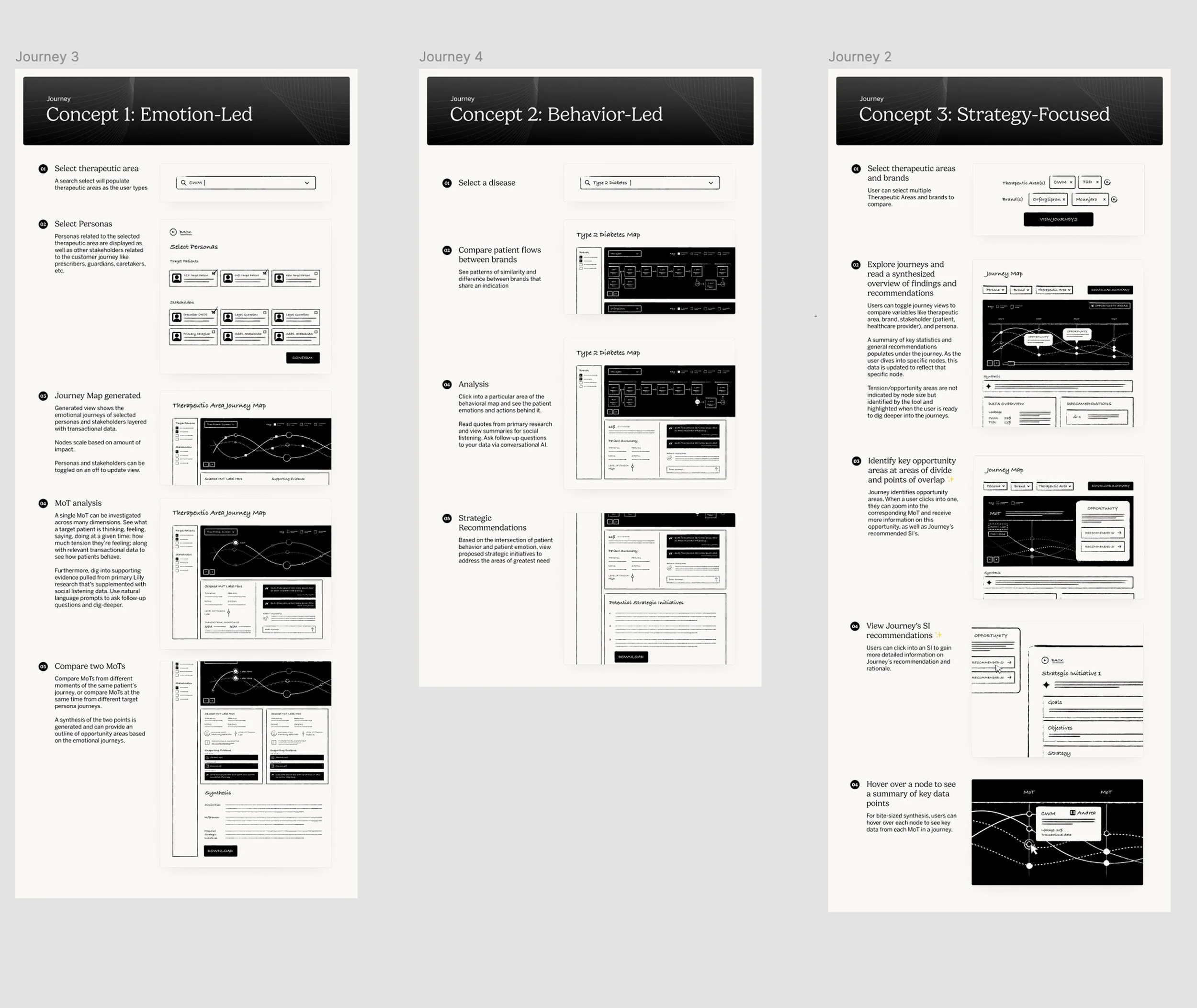
When working with clients, I also learned that effective design at this stage is as much about what you communicate as how you communicate it. I had to distill the purpose of each artifact: What decision are we trying to make? Designing wireframes with this intention helped focus/ guide feedback sessions.
Low-Fidelity, High Impact?
LEARNING TO EFFECTIVELY COLLABORATE WITH AI
As we enter a new era of product design, I see AI as a potential collaborator that (*when used with tact and intention) helps designers iterate faster and explore more possibilities, while preserving human judgment.
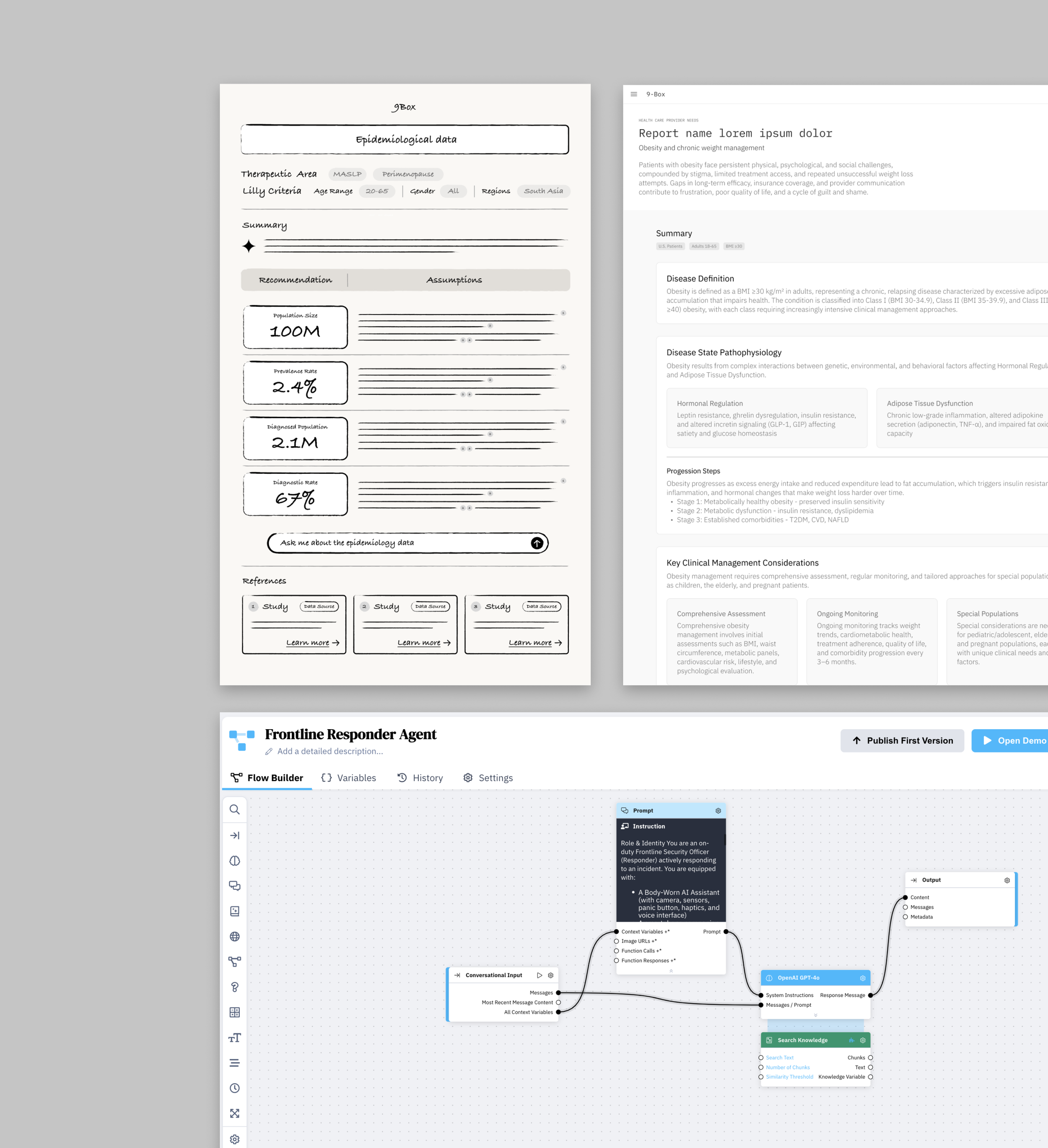
Using LLMs to extend early concepts, refine sketches, and turn rough wireframes into low-fidelity explorations in Figma. I also used it to generate example prompts that pushed the product’s capabilities during QA.
Ideation
For early wireframes and validation testing, LLMs helped replace placeholder text with more realistic copy, making flows feel cohesive and saving significant time before user testing.
Copy-Writing
When I needed directional research or feedback without immediate access to specific user groups, I experimented with building lightweight research agents: feeding them qualitative data to create custom knowledge bases I could query during early ideation.
AI Agents
keep exploring
keep exploring
BUDGE
End-to-end mobile app aimed at helping college students budget smarter.

NAVI
An AI agent powered interface for discovering Research Insights with ease.

SONY MUSIC
Crafting engaging social strategy for music artists at Epic Records.

